
Support Our Work and get Full Access
Subscribe to get full access to the commentary, articles and publication archives.
Why Abraham Kuyper?
Abraham Kuyper was not content to leave theology in the study or politics in the abstract; he pressed both into the life of the Church. And this is where his enduring value lies for us—not merely as a public intellectual, but as a profoundly ecclesial thinker.
Kuyper’s instincts were first and foremost pastoral. Before he was a statesman, he was a minister of Word and Sacrament. That ordering matters. It meant that his vision of cultural transformation did not begin with parliaments or platforms, but with pulpits, tables, and fonts. The Church, for Kuyper, was not one sphere among many; it was the beating heart that gave life to all the others. His famous notion of “sphere sovereignty” only makes sense when one sees that the Church is the sphere that proclaims Christ’s absolute sovereignty over every sphere. The Church does not compete with other institutions, but it does name their limits and call them to account under Christ.
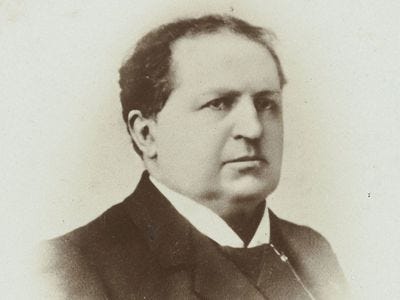
This is why Kuyper’s localism carries such ecclesial weight. He understood that renewal does not descend from centralized power structures, but rises from faithful communities gathered week by week. The parish, the consistory, the ordinary means of grace—these are the true engines of reformation. Kuyper’s vision resists the temptation, so common in modern political theology, to bypass the Church in favor of more “efficient” instruments of change. He knew better. The world is not discipled by policies alone, but by a people formed in worship.
His resistance to totalitarian tendencies must also be read through this lens. Kuyper did not merely oppose the overreach of the state as a political theorist; he opposed it as a churchman jealous for the lordship of Christ over His Bride. When the state seeks to totalize—to absorb education, family, charity, and even worship into its own domain—it is not simply a political error. It is an ecclesial crisis. It is an assault on the Church’s God-given authority to name reality, to bind and loose, to declare what is true and good and beautiful under Christ.
Thus, Kuyper’s founding of a political party was not a departure from his ecclesial commitments but an extension of them. It was an attempt to create space in the public square for institutions—especially the Church—to flourish without coercion. He was not interested in a naked public square, nor in an ecclesiocracy, but in a rightly ordered society where the Church could be fully herself.
In our own moment, Kuyper reminds us that the Church must recover her confidence. The temptation is always to look elsewhere: to national movements, to cultural influencers, to technological solutions. But Kuyper would press us back to the sanctuary. If Christ truly claims “every square inch,” then He does so first through a people who gather in His name, hear His Word, and feast at His Table.
The future, then, does not belong to those who shout the loudest in the public square, but to those who are most faithful in the household of God. Kuyper saw this clearly. And if we would honor his legacy, we must do the same: build from the altar outward, trusting that the quiet, ordinary faithfulness of the Church is the most revolutionary force in the world.
