
Private: “Do What You Want With My Body” – Lady Gaga or Jesus?

Lady Gaga and R Kelly Introduce Song, “Do What U Want.”
The most recent single from the ever controversial Lady Gaga, plays again on the sexualization of women. The song, “Do What U Want” is a conversation between Gaga and R. Kelly as they add lyrics to describe their sexual preferences. While it may not be a song many Kuyperian readers will listen to, I believe it offers a cutting commentary on the materialistic worldview Gaga and Kelly have come to embrace.

R. Kelly is likely one of the most recognized R&B artists alive. In addition to his music career, he is also known for his illicit relationships with young girls. Which makes one wonder what the label was thinking in having the man who had allegedly urinated on women as the front man for a song with a chorus that sings, “Do what you what with my body.”
In this short commentary, it is not my intention to explore the actual music; I offer no commentary on the value of listening to this or of the merit of its musical composition. Instead, because we see culture as “religion externalized,” this song gives us a snap shot on the current pop-culture worldview. What does Gaga offer in this three-minute song that captures the modern audience’s attention and money?
The Song as Commentary on the Body
While researching some responses to this song, there is an idea that this track meant to go against the notion that women are sexually objectified in pop culture, by pointing the finger back at the “media” as the abuser of women’s bodies. Although last months performance of the song at the American Music Awards would’ve served as great platform to inject such a subversive undertone, instead the performance was that of a love affair similar to those of Kelly’s past. Also, if the message is meant to be apathetic to “abusive media” then why react? It is peculiar that the artists with the most pronounced indifference seem to do the most to capture its attention. Which leads me to believe that is not the true message, but rather a plain understanding of this song as sexually self-indulgent makes more sense. The body is free and liberated for the pleasures of unabashed coitus.
In my work in the pro-life arena, there is the strange argument that goes something like, “Abortion liberates women.” This “liberation” is accomplished by killing a woman in half of all abortions. More than this, women find their body’s liberation in a concession to the world around them. They must abort this baby because the world has certain, unwavering, expectations upon them. If she were to remain pregnant, this would certainly inconvenience her greedy employer, her irresponsible boyfriend, guilt-tripping family, the society that would be burdened to support her, and so on. Her liberation is, in reality, a harsh and unrelenting slavery to the demands of the anti-woman world around her.
This is the liberation enjoyed by R. Kelly who sings, “Do what I want” with your body. R. Kelly lords his ownership over Gaga and uses it to his own sexual desires. In this sense, giving away her body is the rejection of her body. Some may rightly look at this as a discussion on modesty and what is lost in a culture that does nothing to censure promiscuity, pornography, etc. But, these external symptoms are pointing to a larger issue that grows out of a certain way of looking at the world.

I mentioned at the start, that this song shows some characteristics of materialism. Materialism is that strange philosophy that in all its discussions about the material, drains all significance and meaning from the material things of this world. When the body becomes just a body, it becomes less than a body. In reality, the body is never just a body-it is who you are. This quote, falsely attributed to CS Lewis, states “You don’t have a soul. You are a soul. You have a body.” This is wrong and Lewis never said it. You are a body and you are a soul, both will still be you after you die and in the resurrection. Rather than the above quote, Lewis actually describes us humans as living in, “organic unity.” In God in the Dock (1948) Lewis depicts our condition as, “human body and human soul.” The two are inextricably tied together.
My friend and Pastor, Michael Denna, often reminds me that new heretics are always guilty of drudging up old heresies. Of all the old heresies, this separation of the “physical” and the “spiritual” is easily the most common and pernicious of all. It has been used to separate the divinity of Jesus from His humanity, by cults since the crucifixion. It’s either based on the denial of the physical (gnostic) or the denial of the spiritual (sadducean).
In the lyrics we discover the desire to separate the spiritual from the physical in an effort to forgo the respect the real body demands. Rather than enjoying the connectedness of the spirit and body in sex, this materialistic worldview reduces women to a machine to be used by man. The ideal becomes the uneven hand of collusive sexual objectification. Flattening the image and reality of body and spirit gives license to Gaga’s sexual self-deprecation. Abusing, neglecting, and rejecting “the body” is embracing the simple mechanics of sex, rather than having to face the risk of real desire and with that, real growth with another person. Mechanical sex between two materialistic things is comfortable because it is simple and places no demands on either individual. This sex is lonely dopamine, real sex is true communion.
But what is true communion?
The Song as a Reflection of Sacramental Thought
This too is lost, even among our most Christian friends, as a consequence of the triumph of rationalism in our sacramental culture. The modern evangelical communicant’s idea of the Eucharist might be found if we were to only change a few words in Gaga’s song (perhaps running the lyrics through some type of clearplay device could accomplish this). The evangelical thought, “It is just a memorial” or treating the Lord’s supper as simply an intellectual exercise, ought to be seen as attempts to embrace those ancient separation heresies. Unfortunately, the attitude among many modern Christians who come to the Lord’s table is as if Christ had instructed, “do what you want with my body” rather than, “Do this.” Our rational interpretations of, “this is my body” make us neglect the true presence. Instead, we ought to consider the real presence of Christ at the Table is as rational as Christ’s incarnation.
Naked Symbols

How we treat the Lord’s table, much like how Lady Gaga composes her lyrics, is a reflection on how we view the world. Embracing a mere symbolic view of the bread and wine is to embrace atheism at the Lord’s table. The minister presents the body reciting the words “this is my body” and “this is my blood,” yet sacramental atheism says, “God isn’t really here.” Or perhaps more poignantly, this atheism asks the question, “Hath God really said?” Did He really mean that “whoso eatheth My flesh and drinketh My blood has eternal life?”
If we doubt God in the seriousness of His ordinances, how should we then see the seriousness of the law they act to confirm? If the sacrament is an intellectual exercise, why not the law? The Gospel conveyed by American Evangelicalism is that Christ’s words are only for the mind, only for the spirit, giving license to the body. Despite how much the Evangelicals detest the sexualization of America’s youth and women, their anti-sacramentalism is a root cause. Naked symbols produce naked sinners. She is not “clothed in scarlet” because she believes scarlet is merely a symbol.
Covenant Communion
James B. Jordan properly writes, “The Lord’s Supper is the covenant meal, and the Lord’s Day is the day of judgment. As we break the covenant through sin during the week, we come to the Lord on the sabbath, confessing our sin, accepting His judgment, and renewing the covenant… The covenant is renewed, and sealed once again by the covenant meal.” This is not to embrace a view that requires one to maintain their salvation through the grace of the sacraments, but rather to affirm the opposite. Christ proclaimed “it is finished” and the Roman soldier pierced His side, and the blood and water flowed from Him. On this, St. John Chrysostom commented: “Not without a purpose, or by chance, did these founts come forth, but because the Church was formed out of them both: The initiated are reborn by water, and are nourished by the Blood and the Flesh. Here is the origin of the Sacraments; that when you approach that awful cup, you may so approach as if drinking from the very side.”
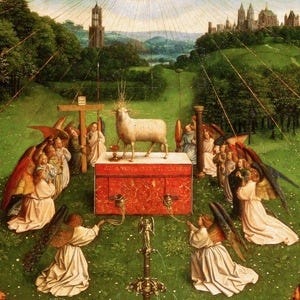
To eat Christ’s body and drink His blood, is participation both in His death and in His resurrection. These cannot be separated. The Eucharist is the real spiritual and bodily invitation to Communion with Christ that opens heaven to the Church and reveals her Lord. In Communion, heaven is opened, all intermediaries vanish, we lift up our hearts and each of us see Christ face to face. We are lifted up to dine with Christ and dine of Christ. This is the marriage supper of the Lamb. The supper is for those who have escaped the whoredoms of the world, those who `have escaped Gaga’s bodily harlotry for the absolute fidelity of Christ the bridegroom.
May we forever rejoice that Christ asks us to, “Do this” with His body.
<>rpg games onlineкопирайтинг стоимость
The post Private: “Do What You Want With My Body” – Lady Gaga or Jesus? appeared first on Kuyperian Commentary.