
Private: Why the Day After the Fourth of July is Much More Important

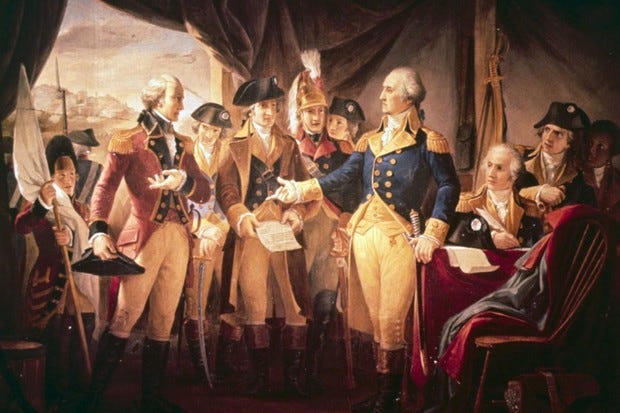
The Day After the Fourth of July
On July 5th, 1776, John Dunlap printed and began to deliver his 200 copies of the Declaration of Independence. For the previous five years, Dunlap has been printing a weekly newspaper often featuring key information about the colonies. But he would soon become the official printer for the Constitutional Convention and provide the medium for the dissemination of the American ideals. His Philadelphia paper “The Pennsylvania Packet” would even survive the British occupation as he secretly printed from Lancaster and be the first paper to carry President George Washington’s farewell address. Strangely enough his business initially made its money by printing sermons.
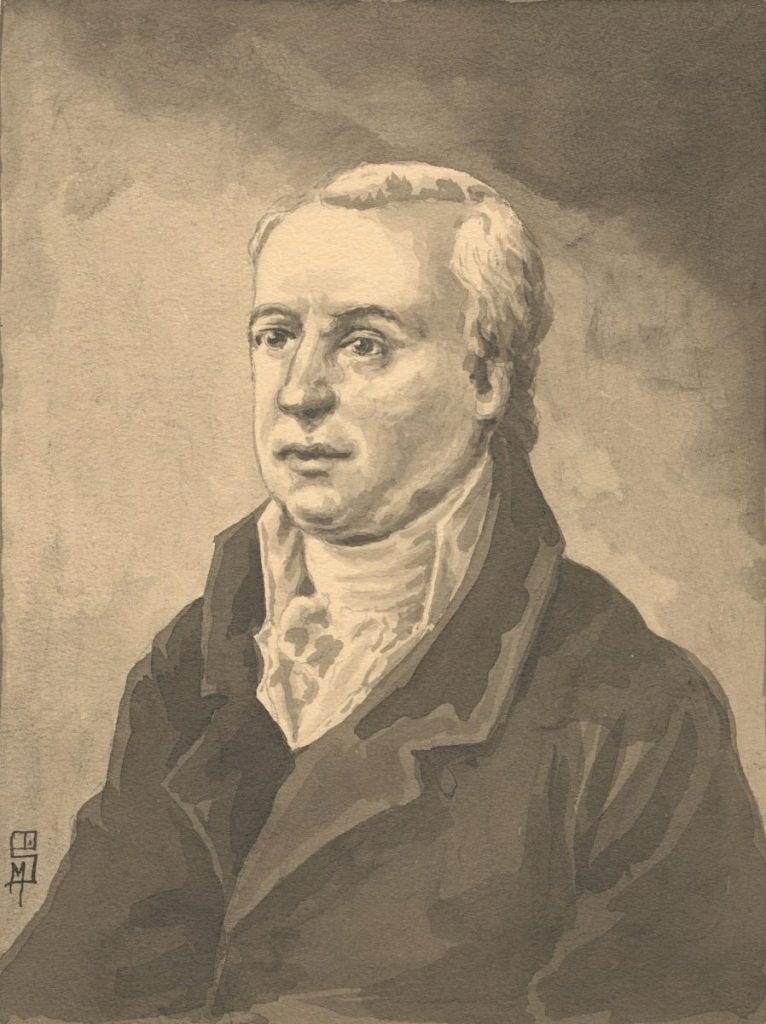
Dunlap’s legacy speaks to the power of the media in America’s founding. A declaration without dissemination was dead. Yet, in another sense the declaration was a death warrant for all who signed their names. Contrary to some American mythology, America’s founders were men of means.
George Washington, for example, was the richest American president until Donald Trump in terms of comparative wealth. And Thomas Jefferson had a peak wealth of over $200 million in current dollars. Does this privilege make the American endeavor any less significant? I would argue just the opposite. They lived comfortably and still decided to risk it all for the principles of liberty.

The “Self-Made” Alexander Hamilton
Much has been made in recent years of Alexander Hamilton’s ability to leverage the American Revolution for his place in American History. As the Broadway Musical that bears his name goes, “How does a bastard, orphan, son of a whore And a Scotsman, dropped in the middle of a forgotten spot In the Caribbean by providence impoverished In squalor, grow up to be a hero and a scholar?” Hamilton is purported to be an “everyman” who fits this American ideal of rising from his circumstances to a place of influence and power. His ability to write and lead is credited for his rise from the island of Nevis to the “room where it happens” beside other founding fathers like Jefferson and Adams.
Dunlap, the colonial printer, had a similar self-made story. At ten years old, he began a decade-long apprenticeship under his uncle. Significant to Dunlap’s story is his own heritage as an Irish immigrant. The Irish people themselves had long fought for their own republic back among the British Isles. But in 18th America, an anti-Irish sentiment prevailed. Hundreds of thousands of Irish migrated during the colonial period, a great majority of them as indentured servants to the more wealthy non-Irish landowners. This population proved to be a pivotal factor in the American revolution as they joined in on the American rebellion as soldiers. British officers would later lament that they anticipated defeat once they recognized that “the Irish [Gaelic] language was commonly spoken in the American ranks.”

The ascendency of men like Hamilton and Dunlap, was therefore more than a matter of economic identity. It required overcoming long standing historic cultural divides in religious, ethnic, and national identities. Historians today debate whether America’s Irish could even be described as “white” because of the adversities they faced in European and North American social spheres. But men like Dunlap seized upon the vision of the American founders to forge their own futures.
Should the American Revolution Fail?
The day after the Declaration of Independence is formally adopted by the Continental Congress is therefore significant in that it represents the beginning of a new experiment. Would the principles of this same document be lived out among the men who penned them? And it is the day after – the 5th of July – when the future of the country is placed in the hands of this Irishman John Dunlap. Again, should the American Revolution fail, Dunlap is delivering metaphorical death warrants for men like Washington.
Dr. Rushdoony’s history of this period of American History is called, “This Independent Republic.” Independent is used to describe free from the British Crown and the overreaching English Parliament. But July 5th represents a different kind of independence as well, independent from the previous cultural conventions that plagued the European continent. The Church was independent of the denominationalism of state religion. The State was independent of divinely instituted monarchies and their royal claims of allegiance. Most importantly, Americans were now independent of the national, class-based, and ethnic boundaries of the Old World. With the Revolution came a new, independent nationality: The American.
Natural-Born Subjects?
English Common Law, according to William Blackstone, described nationality in terms of “natural-born subjects” because “every man owes natural allegiance to where he is born.” This was an impossibility among early American citizens. To borrow from our Lord’s conversation with Nicodemus. Americans had to be “born-again.” To accomplish this, the American Founders offered a Declaration of Independence where men could break with the old man and start new. Yet this new citizenry remained a mixture of rich and poor, men and women, slave and free.
This mixture is only a hindrance for a past-oriented people. The future of the American colonial experiment belonged to a people who held the land in terms of God’s covenant and promises. July 5th was the first day in a new creation under the religious recognition of men as independent or self-governing. Under the phrase, “all men are created equal, that they are endowed by their Creator with certain unalienable Rights,” stands the call to responsibility of every Christian man.
The Holy Commonwealth
Thus the day after Independence Day is a day of action. Progress according to the Early Americans was headed toward a “Holy Commonwealth.” Our founding fathers would measure progress according to a much different standard than many Christian leaders today. Our modern vision of liberty has been clouded by both neo-Marxists ideals of equality and pseudo-conservatives grasping for power – both refusing to recognize today’s America as a beleaguered nation in free-fall toward self-destruction.
Again, it is July 5th. It is a day of opportunities.
Those with power can choose to be like George Washington – and risk life and limb for the future. We may also risk our financial ruin by betting America’s future in gifts toward the Church and Christian Education. But we also risk the ridicule of those in power and influence. We must be willing to go alone or as Jefferson put it declare our “independence.”
Those among the margins are also without excuse, where are today’s Dunlaps? Irishmen willing to apply their trade to the cause. Where are the men willing to spread the news of Christ’s Kingdom even amongst enemy attack and occupation. Modern political movements speak of “demands” pleading for those in power to let down some crumbs for the sake of equality. The new American Revolutionaries must speak of “truths” that supersede political power. The new Revolutionaries must begin to speak of being “endowed by their creator” over “allowed by their government.” We must be willing to go all in on personal responsibility. We must be willing to go all in on independence from the state’s false promises of “benevolence.”
Why is the day after the Fourth of July more important? It’s the day America began.
As the Gipper might say, “It’s morning in America.”
The post Private: Why the Day After the Fourth of July is Much More Important appeared first on Kuyperian Commentary.